What Is Fleet Wrap ROI?
One Payment. Years of Route-Driven Exposure. No Monthly Bill.
Since 2001 we have done the same two jobs: branding fleets and changing car colors. A fleet wrap is the only advertising that gets cheaper every day you run it. Here's how that one-time cost compares with channels that bill every month.
How Does Cost Per Impression Compare?
A full cargo van wrap is a one-time cost of $4,200 that keeps working through its 5 to 7 year service life, while every channel in the table below invoices you again next month. The cost side of that comparison is fixed and in writing. The exposure side is not, and nobody can hand it to you as one number. A van running highway miles all day and a van parked three hours on a residential service call are two different ad buys on the same chassis.
| Ad Channel | CPM | Monthly Cost |
|---|---|---|
| Vehicle Wrap (5-yr lifespan) | Route-dependent* | $0 after install |
| Chicago Billboard | Varies by campaign | $3,000–$5,000 |
| Google Ads (local) | Varies by campaign | $1,500–$5,000+ |
| Facebook / Instagram Ads | Varies by campaign | $500–$3,000+ |
| Radio (Chicago metro) | Varies by campaign | $1,000–$4,000 |
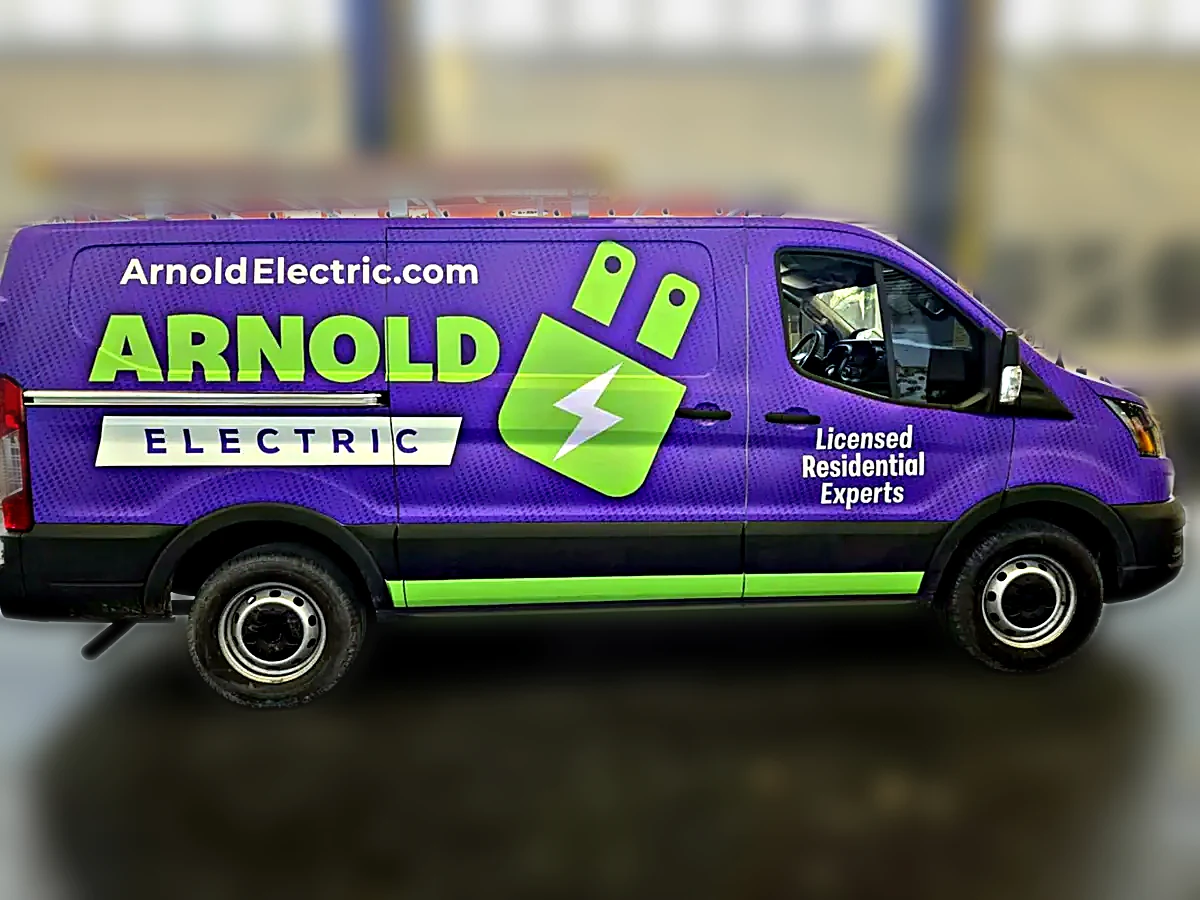
Real-world scenario: 5-van HVAC fleet in Chicago
A Chicago HVAC company wraps 5 service vans at $4,200 each. $19,530 total after the 7% fleet discount. Here's what that looks like over 5 years.
Run it out per unit and per month, because that is the shape the number needs to be in before you can compare it with anything. At the 7% fleet tier the install is $3,906 per van. Keep those vans five years and it comes to roughly $65 per van per month, with nothing billed after the day they leave the bay. That is your denominator, and it is the only half of the equation a wrap shop can put in writing. The other half is the work you can trace back to the vehicles, and that half is on you to capture.

5 vans, 7% fleet discount
per wrap
after install
The contractor advantage
HVAC, plumbing, and electrical contractors have an edge no other business has: their vans park in driveways for hours during service calls. Every neighbor who walks by is a potential customer seeing a wrapped van at their neighbor's house. That's neighborhood-level trust advertising that no billboard or Google ad can replicate.
What Sets The Cost Side Of The Math?
Two decisions made in the first meeting set almost the whole denominator: how much of each vehicle you cover, and how many vehicles you commit to at once. Nothing later in production moves the figure as far as those two do.
Coverage is priced off the full wrap. Lettering and decals run 20 percent of the full-wrap price, a partial runs 55 percent, and a color change adds 15 percent on top of full. Worth running both ways before you sign. Lettering on nine vans puts your name on nine routes for roughly what two full wraps cost, which is usually the better buy when the phone number is the pitch. Full coverage earns its price when the graphic is the pitch, where the vehicle has to make a one-truck shop look like a ten-truck shop.
Vehicle count sets the per-unit price, and the ladder is published rather than negotiated. It begins at two vehicles: 3% at 2 to 4 vehicles, 7% at 5 to 9, 11% at 10 to 24, and 15% at 25 and up. It applies per contract and does not stack across separate orders, so splitting one fleet into two purchase orders to spread the spend over two quarters can cost you a whole step. If you are sitting at four vans and buying a fifth this year, ask what both orders look like written as one.
Two line items people brace for are not there. Design sits inside the full-wrap price, so there is no separate creative charge to work into the math. And pickup is free across Cook, DuPage, Kane, Lake, Will and McHenry counties, so getting the vehicle to the Portage Park shop does not cost you a tech for half a day.
How Do You Track What A Wrap Brings In?
Set the tracking up before the vehicle leaves the bay. Afterwards is too late. The comparison you want is the period before the wrap against the period after it, and the first half cannot be built retroactively.
- A dedicated phone number on the wrap, forwarded to your main line. Every call it rings came off the vehicle, with no software and no guessing. Print it on the rear doors as well as the sides, because the rear is the panel a driver stopped behind you has time to read.
- A short landing page that is not your homepage. One line of URL on the lower rear door keeps wrap inquiries separate from everything else your marketing is doing.
- A QR code only where somebody can stand still. Low and centered on the rear door works. On a side panel it is being read while it is moving, which means it is not being read.
- One question on the intake script. Give the caller a real way to say they saw the vehicle instead of burying it in an other box, and train whoever answers the phone to ask it out loud.
- Like-for-like seasons. Measure the quarter after install against the same quarter a year earlier. A landscaping fleet and an HVAC fleet have opposite busy months, so comparing against last quarter tells you about the weather instead of about the wrap.
None of that is exotic, and it is the whole difference between a number you can hand a lender and a feeling that the vans are working. Any shop that quotes you a payback period is filling that gap with somebody else's average.
Does The Wrap Hold Its Value For Its Whole Service Life?
What a wrap sells is legibility. It stops earning on the day your phone number gets hard to read, and in Chicago that day is brought on by road salt long before it is brought on by sun.
So the build belongs in the return math. We print on cast film, Avery Dennison MPI 1105 or 3M IJ180-CV3, and the print goes under 3M 8518 gloss overlaminate. The laminate is the layer that takes the salt, the UV and the brush at the car wash. Leaving it off shaves a little off the install price and costs you the back half of the service life, which is the half where the arithmetic turns in your favor.
Three numbers people blur together
Installation and workmanship carry a 2-year warranty. The wrap material carries a 5-year material warranty. Expected service life is 5 to 7 years, which is a service life and not a warranty. Keep the three apart when you decide how many years of use to put under the installed cost.
Changes cost less than reprints. A new phone number, a dropped service line or an added license number can usually go on as an overlay rather than a reprint of the panel. And when a wrapped vehicle goes back on lease or out to auction, removal is priced at 40 percent of the full-wrap price. Put that in the plan at the start and it is a line item. Find it at the end and it is a surprise.
Frequently Asked Questions
What is the ROI on a fleet wrap?
There is no single figure, and any shop that hands you one is guessing. Four inputs set your return: the installed cost, the months the vehicle stays in service, the jobs you can trace back to it, and your gross margin on those jobs. The third input is the one most owners never capture, which is why we tell every fleet customer to set a tracking number up before install day. Chicago Fleet Wraps does not publish a payback period, because we do not know your route or your close rate.
How do I track leads from my vehicle wrap?
Use a dedicated phone number on your wrap that forwards to your main line. This lets you track exactly how many calls came from the wrap. QR codes on the rear of the vehicle also work for measuring digital engagement from wrap viewers.
Is a fleet wrap better than Google Ads for local businesses?
They serve different purposes. Google Ads captures intent. People already searching for your service. Vehicle wraps create awareness before the need exists. The most effective Chicago service businesses use wraps for brand presence and Google Ads for intent capture. The wrap is paid once, while Google Ads bill every month.
How many impressions does a wrapped van get in Chicago?
Nobody can answer that honestly with one number, and the quick answer at the top of this page shows where the figure most people repeat actually came from. What moves exposure on a real route is highway miles, the hours the vehicle sits somewhere people walk past it, and how much of the working day it is out of the yard at all. A plumbing van doing eight stops in dense blocks and a van doing two long suburban calls are not the same advertisement, even with identical graphics. Count your own routes instead of borrowing an average.
How should I measure ROI from a vehicle wrap?
Write down the installed cost, the months you expect the vehicle to stay in service, the traceable jobs, and the margin on those jobs. Divide, and the figure is yours rather than borrowed. Set the tracking up first: a dedicated phone number that forwards to your main line, a short landing page that is not your homepage, and an intake form that lets a caller say they saw the vehicle. We do not supply a universal impressions count or a CPM, because neither one survives contact with an actual route.
Related Resources
One payment. Years of exposure. No monthly bill.
You pay for the install once. After that the vehicle carries your name for every mile it runs, with no media invoice behind it. Send us your vehicle list and the installed cost comes back itemized within 24 hours.
Get Your Fleet Quote in 24 hours →RELATED SERVICES
“Fleet Wrap Roi. Same standard every time: the lamination is what survives the car wash, so we never skip it to save a dollar. That is how we have done it since 2001.”
*CPM is not universal. It depends on the exposure assumption, route, operating schedule, and measurement period. Use the ROI calculator with your own assumptions.
