Trailer Wraps Chicago, Free Pickup: That Trailer You're Towing Is Free Advertising. Claim It.
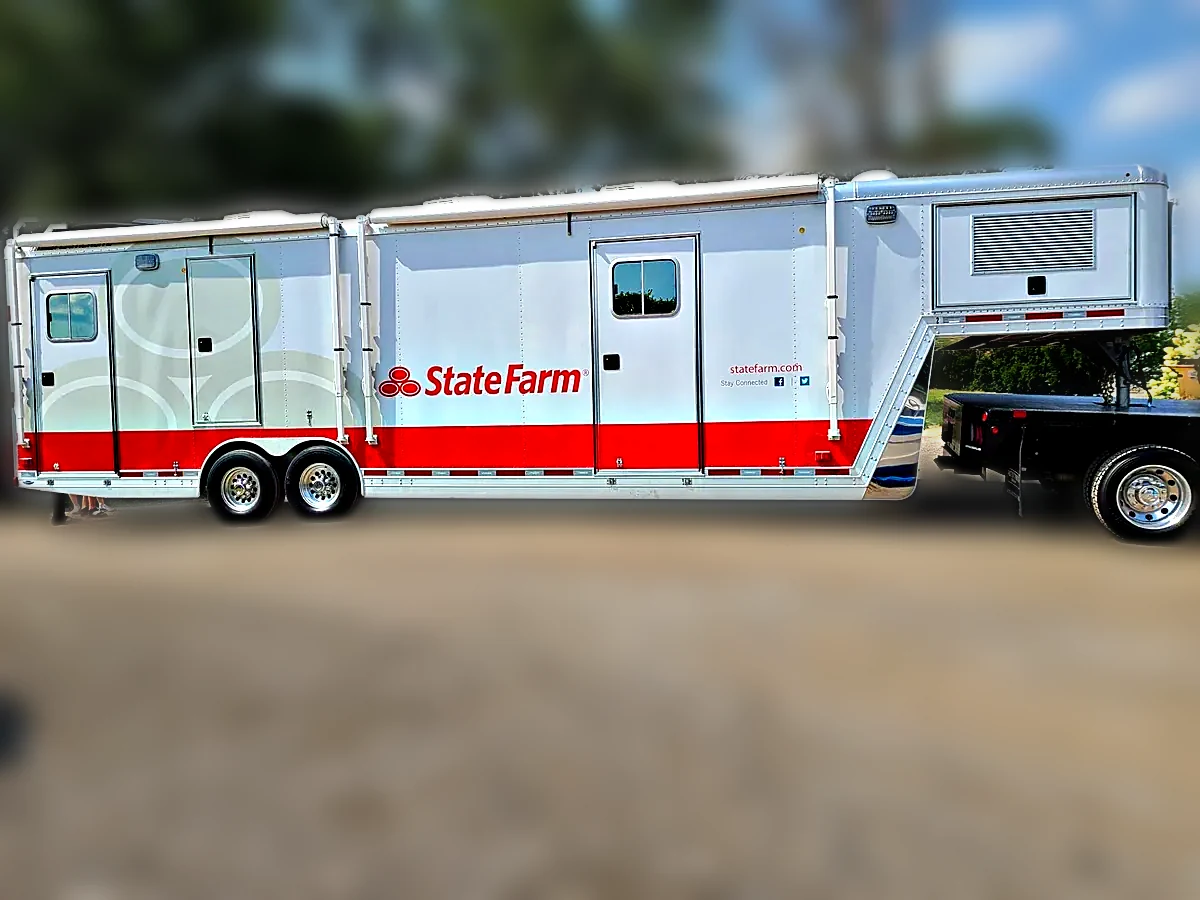
Trailer wraps in Chicago for enclosed, flatbed, utility, and specialty trailers. Trailers carry massive flat panels, which makes them the largest mobile billboard you can own, and Chicago Fleet Wraps handles the work end to end from design through installation at our shop on N Lamon Ave.
- Enclosed trailer wraps. 6x12, 7x14, 8.5x20, and larger
- Flatbed trailer graphics. Side rail lettering and panel wraps
- Utility trailer wraps. Landscaping, construction, and service trailers
- Refrigerated trailer wraps. Food distribution and cold chain
- Car hauler trailer graphics. Auto transport and dealership trailers
- Concession trailer wraps. Food and beverage service trailers
A full trailer wrap is priced by wrappable square footage from the $2,850 one-off minimum, so utility, enclosed, and semi-trailers are all quoted by size. Every installation uses premium Avery Dennison MPI 1105 or 3M IJ180-CV3 cast vinyl with UV overlaminate, rated 5 to 7 years outdoor. Our shop at 4711 N Lamon Ave #7 handles trailers up to 53 ft, with free pickup and delivery across Chicagoland and a 2-year workmanship warranty.
What Are the Benefits of Trailer Wraps for Chicago Businesses?
Trailer wraps offer the largest continuous branding surface of any vehicle. Up to 600 square feet on a 53-foot trailer. Wrapped trailers parked at business locations or traveling I-90/I-94 advertise for a one-time cost of $3,500 to $8,500, and how many people see them depends on the route.
A trailer earns its keep differently from a van. The van is moving when people see it. The trailer is usually parked, often for days, at a job site, a supply yard, a loading dock or a festival lot, so the panel has to read to somebody standing still. Trade and phone number go large and high where a stopped driver takes them in, and the detail work goes low, at the height of a person walking past.
It changes the material call too. Trailers live outside year round and catch everything the tow vehicle's rear tires throw back at them, so every trailer we wrap gets Avery Dennison MPI 1105 or 3M IJ180-CV3 cast film under a gloss overlaminate. The laminate is the layer that takes the road salt, the grit and the pressure wand. The print underneath never gets touched.
Trailers also flex more than the trucks pulling them. A box trailer twists at the front corner coming off a curb cut, and the rear frame moves every time a ramp door drops. Cast film recovers from that. Calendered film does not, which is why a bargain trailer wrap lets go first at the top rail and around the ramp hinge.
More detail
How Does Chicago Fleet Wraps Quote a Trailer Wrap?
Trailers do not come off a per-model price list the way a Transit or a Sprinter does, and that is a function of the vehicles rather than a dodge. A 7x14 enclosed box and a 7x14 landscape trailer hold completely different amounts of wrappable film. Two trailers with the same stated length can differ by a foot of usable panel once the rub rail, the marker lights and the conspicuity tape come out of the math. So we measure, then quote the project.
What gets measured on the walk around:
- Usable panel per side. Rail to rail and wheel well to roof line, not the advertised box size
- Body construction. Smooth bonded aluminum, screwed sheet over studs, fiberglass, or a plywood lined body with exterior rivets
- Fastener and seam count. A riveted side is slower than a bonded one because each row has to be worked individually, and that shows up as labor rather than material
- Doors and gates. Barn doors, a roll up, a drop ramp and a side man door each break the artwork, and each one becomes its own panel
- What stays bare. Reflective conspicuity tape, marker lights, the plate area and the rub rail get masked, never covered
- Surface condition. Chalked aluminum, old lettering, silicone from an earlier repair, or a lower rail that needs degreasing and an alcohol wipe before film goes anywhere near it
Once it is measured, the number holds. The initial reply to your request comes within 2 business hours, and the itemized quote follows within 24 hours of our having the measurements and the artwork direction. Volume discounts run across a single contract, 3% at 2 to 4 units up to 15% at 25 or more, and a trailer counts as a unit alongside the trucks on the same order.
Last Updated: April 2, 2026
What Does a Trailer Wrap Install Actually Involve?
The trailer comes inside before the work starts, and in winter it comes in the night before. A cold aluminum panel will not take film, and a trailer that has sat outdoors in February needs hours at bay temperature before anybody opens a roll. Once it is warm it gets washed, degreased and wiped down with alcohol. On an older trailer most of that cleaning time goes into the rub rail and the bottom six inches, where the road has been grinding away for years.
Panels go on one at a time, squeegeed from the center of the panel outward, then post heated at every fastener, seam and recess so the adhesive sets in its final shape instead of pulling back a month later. Edges get trimmed back from the panel break rather than lapped over a sharp lip, because an edge standing proud of the metal is the first thing a brush wash or a loading dock will find.

Doors get their own treatment. Barn doors come off the hinges when the hardware allows it, so film runs past the hinge line and the graphic reads as one piece with the doors shut. A roll up door is wrapped slat by slat with a relief at each hinge; skip that and the wrap tears the first time the door rolls onto the drum. Ramp doors take film on the outer face only, never on the walking surface.
Trailer Types and What Each One Needs
- Enclosed cargo trailers, 6x12 through 8.5x20 and larger. The flattest canvas we work on. Screwed sheet over studs telegraphs faint vertical lines through film, so the layout puts logos between the stud rows instead of across them.
- Flatbeds and equipment trailers. There is no box, so the work is side rail panels, fender graphics and a headboard. Rear facing lettering usually matters more here than artwork does.
- Utility and landscape trailers. Mesh sides take no film at all. We wrap the gate and the headboard, letter the rails, or build out a solid panel section to carry the graphic.
- Refrigerated trailers. Thin skin over foam insulation, so heat goes on light and slow. Film stays off the reefer unit, the drain lines and the vents.
- Car haulers. Open deck, so the graphic lives on the beaver tail, the fenders and the headboard, and all of it has to clear winch points and tie downs.
- Concession and food trailers. The most design work of the group: a menu that reads from the back of a queue, framing around the service window, and signage that stays legible after a season of scrubbing.
Across all of them the install itself runs one to three business days depending on size, door count and how much of the body is genuinely wrappable. Design and proofing happen before the trailer ever comes in, so bay time stays install time.