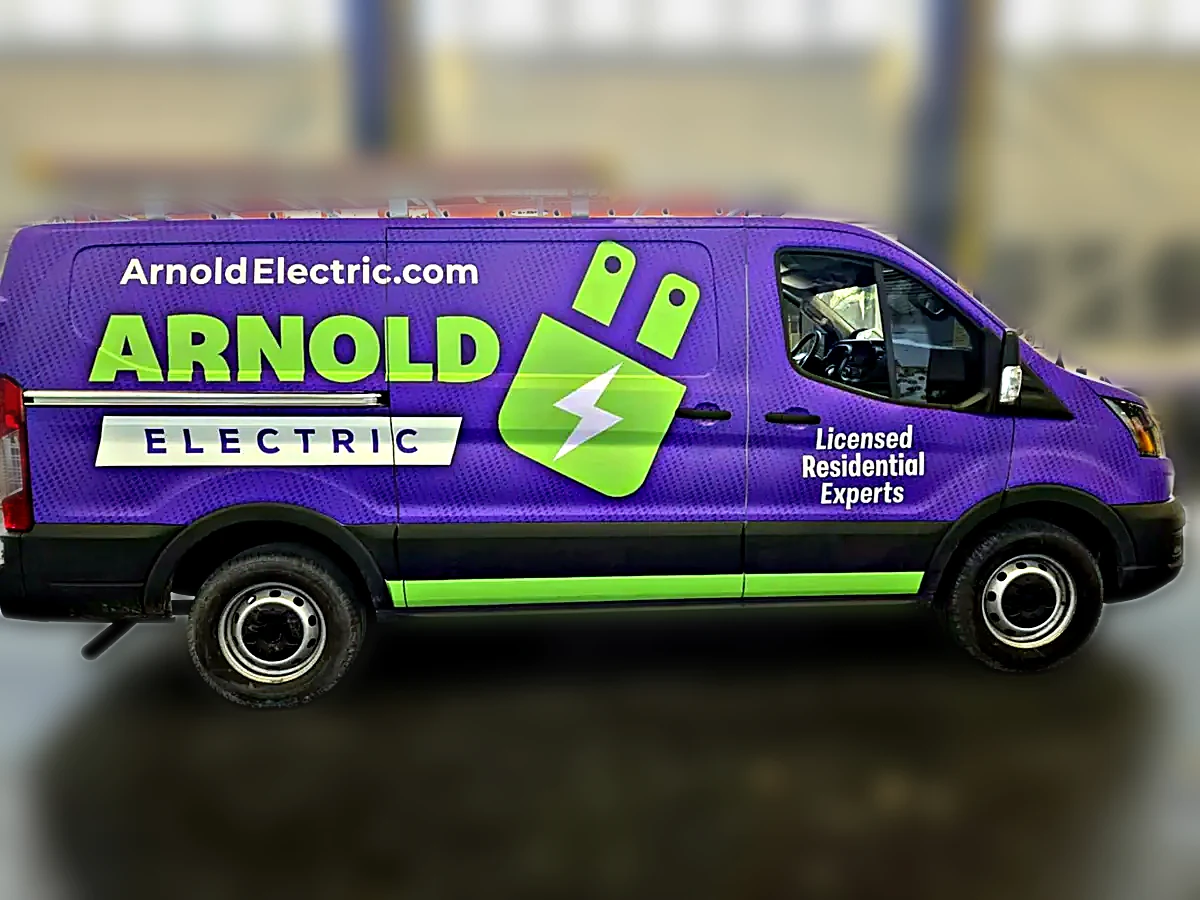


More detail
Also on this: post/vehicle wrap paint damage liability, post/are chrome wraps legal chicago, post/3m vs avery dennison wrap film fleet buyers guide, wrap material guide.
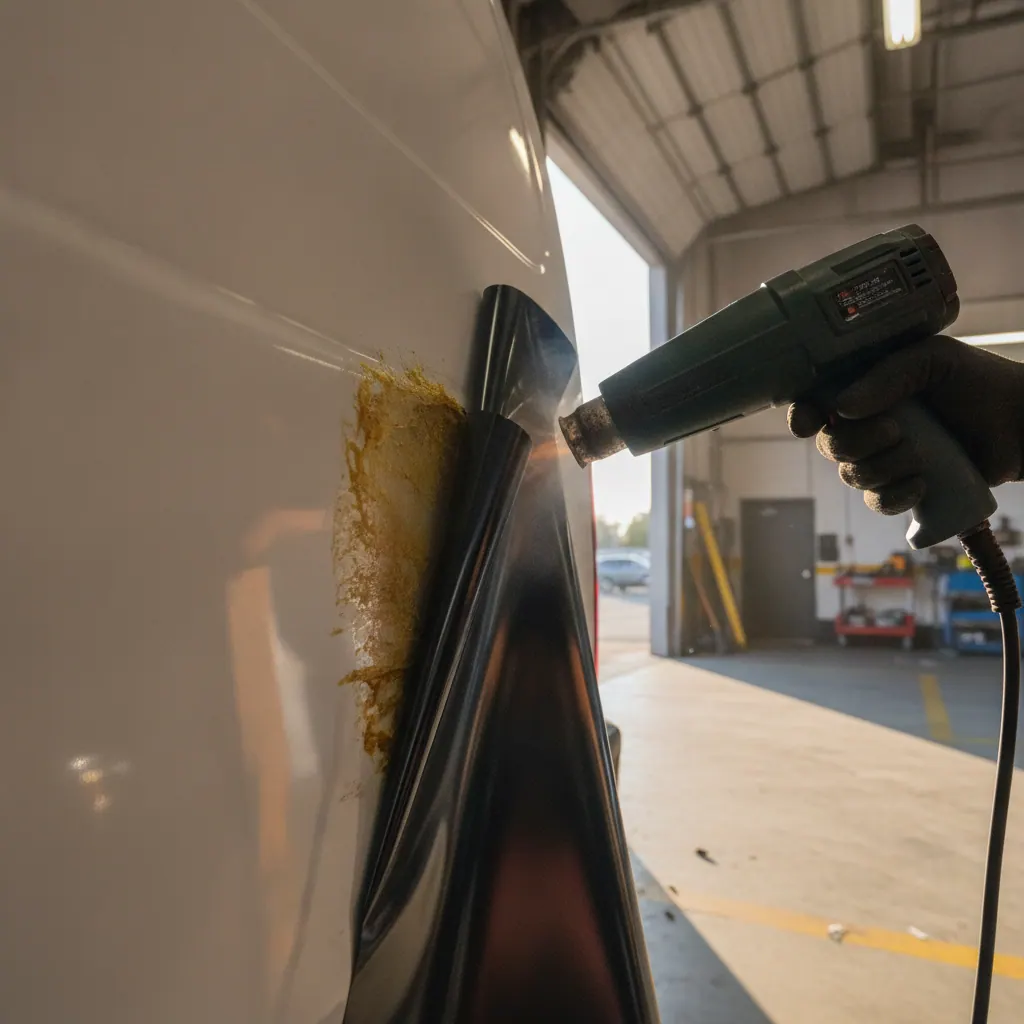
Vehicle wrap removal runs about 40% of the vehicle's full-wrap price, roughly 4 to 6 hours for a cargo van. We work a heat gun at 140 to 180 degrees under a zero paint damage protocol, and we remove wraps from any vehicle, whoever installed them.
Removal is measured the same way a wrap is, then priced at 0.40 of what a full wrap on that same vehicle would cost. A cargo van that wraps at $4,200 comes off at 40 percent of that figure. A box truck is more, because there is more panel and more of it sits above shoulder height. Lettering and partial coverage total less than a full strip, though they are slower per square foot, because every cut edge has to be found and chased by hand.
Labor, not material, is what you are paying for. Three things move the hours: how old the vinyl is, what it was to begin with, and what is underneath it. Cast film taken off inside its service life comes away in long sheets and leaves little behind. Film left on well past that point has gone hard and comes off in chips, which means a softener and more passes. Cheap calendered vinyl shrinks on the vehicle and tears at every corner, so a bargain wrap is the most expensive kind to take off.
A removal quote covers the film, the adhesive and the cleanup, not just the peel. That is the vinyl off every panel you asked us to strip, the jamb returns and door edges where the ends were tucked, residue taken down with 70 percent isopropyl alcohol on a lint-free cloth, and the old material bagged and hauled away. A vehicle does not go back to you with glue shadows on it.
Plan the day around the vehicle, not the calendar. A cargo van runs 4 to 6 hours. A box truck runs 8 to 12. Fresh cast vinyl can be off a van in 3 to 4 hours. Film that has been baked on for years takes longer than any of those, and we say so before we start rather than after.
Two things push a removal quote up, and both are worth knowing before you call. The first is coverage you forgot about: roof panels, perforated window film, and lettering on the back doors from a brand two owners ago. The second is what the film has been holding together. Rock chips, a resprayed panel that never cured properly, and rust blooming under a seam were all there before we arrived, and they become visible the moment the vinyl is gone.
If the plan is to rewrap, book the removal and the new install as one job. The panels have to be degreased, wiped with isopropyl and dried before new film goes down anyway, and doing both together takes the vehicle off the road once instead of twice.
Heat first, every time. A heat gun at 140 to 180 degrees F, held four to six inches off the panel, softens the adhesive until the film releases instead of tearing. Then the angle. Peel the film back on itself at 15 to 20 degrees to the panel, not straight out at 90 degrees. A low angle puts the load into the adhesive. A high angle puts it into the paint, and on a panel with a chip or a thin repaint that is where damage starts.
Work in strips you can control, keep the heat moving with the peel instead of parked in one spot, and start at an edge that is already loose, usually a door edge or a jamb return. Overlaps come off in the reverse of the order they went on. Perforated window film is its own job and a slower one, because the adhesive sits down in the holes and wants to stay there.
Residue is the slow part and the source of most complaints. Adhesive left behind gets 70 percent isopropyl alcohol on a lint-free cloth and patience, not a razor. Blades belong on glass, never on painted steel and never on a plastic fascia. Once a panel is clean it gets a dry wipe so nothing is left to flash under new film or under wax.
Done that way, factory paint is not the thing at risk. CFW has zero verified paint damage claims from professional removal, and the paint that spent its service life under cast vinyl usually comes out brighter than the paint beside it that spent the same years in the sun and the salt.
On a car, on a weekend, with a real heat gun and no deadline, yes. Borrow or buy a proper heat gun rather than a hair dryer, keep it moving, work in strips, and expect the first panel to take far longer than the last one while you find the rhythm. Have isopropyl alcohol and a stack of lint-free cloths ready before you start, not after.
Where it stops being worth it: a high roof you cannot reach from the ground, perforated window film, a fleet van that has to be on a route tomorrow morning, or any panel where you can already see a chip or a repaint. At 0.40 of the full-wrap price, a professional strip is usually cheaper than a lost weekend plus one damaged panel.
Cold is the one thing that cannot be worked around. Film will not release off a frozen panel, and heat put into a cold-soaked body goes into the steel instead of the adhesive. Vehicles come inside and sit until the sheet metal is at shop temperature, which is why a January booking has that warm-up time written into it rather than pretending it does not exist.
Removal is its own booking in our shop, not an afterthought bolted onto a wrap job. There is roughly 6,000 square feet of install space across five bays in Portage Park, secure indoor storage overnight, and pickup across Cook, DuPage, Kane, Lake, Will and McHenry counties. The first response comes back within 2 business hours, and once we know the vehicle and the coverage the itemized number follows within 24 hours.
Professional wrap removal at CFW costs 40% of the full-wrap price for the same vehicle: 40% of $4,200 for a cargo van, more for a box truck. Vinyl removed within its rated lifespan comes off fastest. Aged vinyl beyond 8 years requires more labor.
Use a heat gun at 140–180°F at 4–6 inch distance to soften the adhesive, peel at 15–20 degrees from the panel surface, then clean residue with 70% isopropyl alcohol on a lint-free cloth. CFW has zero verified paint damage claims from professional removal.
Yes, but heat is non-negotiable. Use a heat gun at 140–180°F and peel at a low angle. Cold removal — pulling without heat — is the primary cause of paint damage in DIY removals.
Cargo van removal: 4–6 hours. Box truck: 8–12 hours. Vinyl age is the primary variable: fresh cast vinyl may remove in 3–4 hours; vinyl beyond 8 years requires chemical softener and extended time.
Not with professional removal. Cast vinyl removed within its rated lifespan using correct heat and peel technique does not damage factory paint. Factory paint under a properly installed and removed wrap is typically in better condition than exposed areas on the same vehicle.
Roy Wraps is the founder and lead installer of Chicago Fleet Wraps (CFW), an Avery Dennison certified installer with in-house HP Latex printing. Roy has wrapped vehicles since 2001, starting in Las Vegas, and CFW has operated in Chicago since 2014. Roy has personally overseen 19,400+ commercial vehicle wrap installations across Chicagoland and Illinois, with fleet programs serving Milwaukee, Indianapolis, and St. Louis markets.
CFW responds within 2 hours. Fleet accounts get confirmed install windows and priority scheduling.
Free Fleet Quote · 2-hour response
Itemized pricing in your inbox within 24 hours. Not a range. 19,400+ vehicles wrapped. HP Latex, Avery, and 3M films. Pickup across Chicagoland.
or call (312) 597-1286
“Post/Vehicle Wrap Removal Guide. My rule is simple: the wrap goes on to protect the paint underneath, and it peels off clean years later. That is the difference between a wrap that lasts and one that does not.”
Ready for a quote? See Safe Wrap Removal or get an itemized quote in 24 hours.
Chicagoland Coverage
Scheduled fleet pickup and full-service installation across the city and suburbs. Wrapping since 2001 and in Chicago since 2014, with 19,400+ vehicles wrapped.