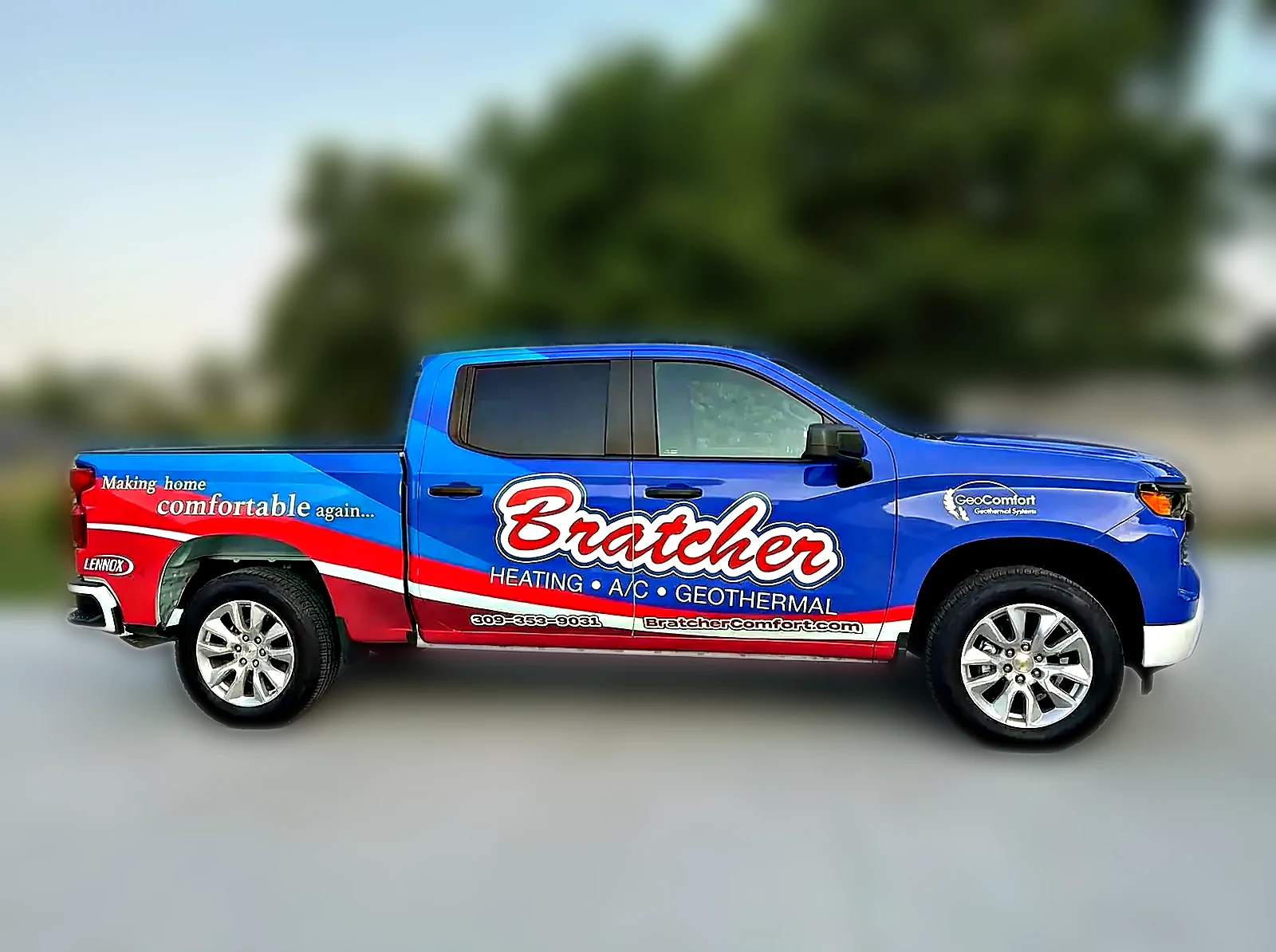
Service Vehicle Branding:
Make Every Work Vehicle a Brand Ambassador
Your Service Vehicle Is Already Driving Past Customers. Put It to Work.
A plain white van burns the most valuable advertising space your business owns. The same vehicle, branded properly, becomes a moving billboard you pay for once and that works on every route it drives. Here is the ladder, from least coverage to most, and how to get each step right.

Start with the three essentials
Before any design, lock the three things a stranger must read in two seconds: your business name, your phone number, and the one service you want the call for. Everything else is secondary. A clean lettering package with these three already outperforms a blank white van.
Design for 40 miles per hour
Your vehicle is read in motion. Use one bold typeface, high contrast, and a phone number tall enough to read from the next lane. Skip the paragraph of services. One headline, one number, one logo. If it is not legible at 40 mph, it is not working.
Which Coverage Level Should You Choose?
There is a ladder. Cut-vinyl lettering brands the van for the least cost. A partial wrap adds your color and logo across the sides and rear. A full wrap turns the whole vehicle into the billboard and generates the most recall. A full cargo van wrap is $4,200, a pickup $3,500, a box truck from $5,300, all in cast vinyl.

Make every vehicle identical
Recognition comes from repetition. When every truck in the fleet carries the same colors, logo placement, and phone number, each vehicle reinforces the others. A customer who sees one van three times remembers the brand. Mixed branding across a fleet throws that away.
Add a tracking hook
Put a QR code or a dedicated vanity phone number on the wrap so you can measure what it brings in. When calls and scans are attributed to the wrap, you stop guessing about ROI and start optimizing the design.
Maintain it
Hand wash only, no brush car washes, and rinse winter road salt off promptly. A maintained cast wrap brands your business for 5 to 7 years. Neglect shortens that.
Lay the design out panel by panel
A work vehicle is not one flat billboard. It is a handful of reading surfaces with different jobs, and the budget should follow the ones people actually look at.
- Both long sides. The largest surface and the one read from the next lane over. Use the same artwork left and right, mirrored only where the design points somewhere, so the vehicle reads correctly whichever way it is parked at a job site.
- Rear doors. The panel that gets looked at longest, by whoever is stopped behind you. Put the phone number and one request here, sized to be read from a car length and a half back, not sized for a phone screen.
- The front. Grille and bumper graphics are read in other drivers' mirrors. Keep that to a logo mark, because words laid across a grille get chopped up by the shutlines and the bumper gap.
- Hood and roof. Nobody at street level sees either one. Spend there only if your vehicles park where office floors look down on them.
- Rear glass. Perforated window film carries the design across the glass and still lets the driver see out of it. It is a different material from the body film and it belongs on the quote as its own line.
Then design around the hardware, which is where service vehicles differ from passenger cars. Sliding door tracks, ladder rack feet, shelving brackets, fuel doors, grab handles and wheel arches all interrupt a panel, and artwork that lands on a body seam or a door gap gets cut at that line. Keep the logo and the phone number inside a clean field with margin on all four sides. If the vehicle carries a USDOT number or state lettering, place it where the rules require and build the artwork around it instead of over it.
Sequence the rollout so the fleet keeps working
The real objection to branding a fleet is rarely the design. It is that the vehicles have to be out earning. Sequencing fixes most of that. Brand one vehicle first and sign it off standing next to it, because the first unit is where type size, color and placement get corrected cheaply. Once that one is approved it becomes the reference every later vehicle is matched against, and nobody is making layout decisions over email at vehicle number nine.
After the first, send vehicles in small batches instead of all at once, and start with the ones on your highest-traffic routes. Printing a fleet in as few runs as you can also keeps the color tight, since the same file printed months later on a different roll of media can drift a shade; if you know more vehicles are coming, ask the shop to keep the color profile and roll notes on file against your account. CFW picks vehicles up from the yard at no charge across the Chicagoland area, and units stay indoors overnight between install days rather than parked on a street, so in practice a van leaves your lot once and comes back branded.
Frequently Asked Questions
What is the cheapest way to brand a service vehicle?
Cut-vinyl lettering with your business name, phone number, and one service. It is the lowest-cost step on the ladder and already beats a blank white van. From there you can step up to a partial or full wrap.

Lettering, partial wrap, or full wrap, which should I choose?
Lettering brands the vehicle for the least cost. A partial wrap adds color and logo across the sides and rear. A full wrap maximizes recall and impressions. Most fleets start where their budget allows and step up over time.
How do I track whether my wrap is working?
Put a QR code or a dedicated vanity phone number on the wrap. Calls and scans attributed to the vehicle tell you exactly what the branding brings in.
Why should every vehicle in my fleet look the same?
Recognition comes from repetition. Identical branding means each vehicle reinforces the others, so a customer who sees your trucks around town remembers one brand instead of several.
How much does it cost to wrap a service vehicle in Chicago?
A full cargo van wrap is $4,200, a pickup $3,500, a Sprinter $4,200, and a box truck from $5,300, all in cast vinyl with a 2-year warranty. Lettering and partial packages cost less.
Keep Reading
Get a Free Fleet Wrap Estimate
From lettering to full fleet wraps. Free pickup across Chicagoland. 19,400+ vehicles wrapped.
“Turn Service Vehicle Into Brand Ambassador. The part nobody tells you: we run cast vinyl, not calendered, so it conforms to the curves and will not shrink back. It is part of why we have zero verified paint-damage claims.”