Vehicle Wraps Vs Billboards Chicago

Vehicle Wraps vs Billboards Chicago, a CPM Comparison: Your Van Drives Every Street You Work.

Quick AnswerA vehicle wrap in Chicago is paid once and works for its 5 to 7 year service life, while Chicago billboards bill every month. Vehicle wraps create repeated local exposure wherever your fleet drives and parks. Daily exposure varies by route rather than following one universal industry number. A $5,000 Chicago billboard runs 4-12 weeks. Vehicle wraps win on repeated exposure across your service area; billboards win on single-point targeting.

A wrapped cargo van on Chicago's Kennedy Expressway advertises to the traffic around it for a one-time cost of $4,200. A billboard on that same corridor costs $3,000–$8,000 per month. The wrap follows your route. The billboard sits in one spot.

📊 Exposure varies by route 💰 $4,200 one-time 📅 5–7 Year Lifespan ✓ Generally Tax-Deductible Advertising

Are Vehicle Wraps More Effective Than Billboards in Chicago?

The honest answer starts with what you can actually count: what the wrap cost installed, which routes the van runs, how many months it stays in service, and what you do to tie a phone call back to it. We do not publish a single reach number for a wrapped van, because that number moves with the route. Work out your own from the corridors your drivers already cover, then put a dedicated phone number or landing page on the vehicle so the comparison against a billboard invoice is like for like.

What you are buyingWrapped work vanChicago billboard face
How the bill arrives$4,200 one-time$1,500 to $5,000 a month, every month
Where the message sitsWherever the van works that dayOne structure, one sightline, one direction of travel
Who reads itDepends on the routes you runWhoever passes that structure
Who controls the artworkYou own the panelPosting windows set by the face owner
Tax treatmentGenerally deductible as a business advertising expenseGenerally deductible as a business advertising expense
What you hold in year fiveA van still carrying the brandNothing, unless you renewed
Fleet van wrap Chicago Fleet Wraps

The Chicago Service Business Case

Billboards do have one genuine advantage: scale. A 14x48 ft billboard visible from I-90 reaches a massive simultaneous audience. For local service businesses though. HVAC, plumbing, contracting, delivery. A wrap that drives through Lincoln Park, Wicker Park, and Logan Square in a single day reaches the homeowners who actually need you.

Precision Today HVAC service van by Chicago Fleet Wraps

A billboard owner sells you a sightline. You are buying whatever traffic happens to pass one structure, in one direction, during the weeks you hold the face. A wrap sells you the panel, and the panel goes where the work goes. If the crew spends Tuesday in Portage Park and Wednesday in Berwyn, that is where the logo and the phone number turned up. Nobody can hand you a traffic count for that, which is why we talk about routes instead of one reach figure. The wrap is generally deductible as a business advertising expense, the same as the billboard invoice.

Commercial van wrap Chicago

Long-Term Cost Analysis: Wraps vs. Billboards

The economics of vehicle wraps versus billboards become even more compelling when you extend the analysis beyond the first year. A Chicago billboard on the Kennedy Expressway costs $8,000–$15,000 per month. That's $96,000–$180,000 per year. A single vehicle wrap costs $4,200–$5,500 one time and lasts 5–7 years.

Arlington Heights fleet van wrap by Chicago Fleet Wraps

Over 5 years, a billboard costs $480,000–$900,000. A fleet of 5 wrapped vehicles costs $18,750–$27,500 total. The billboard reaches the same commuters on the same stretch of road. Your wrapped fleet reaches different neighborhoods, different demographics, and different potential customers every day. Wherever your vehicles drive, park, and service clients.

Billboards also have geographic limitations. You rent one location. A wrapped vehicle covers your entire service area. From downtown Chicago to the suburbs, from job sites to client offices. Vehicle wraps create repeated exposure across normal driving routes, while static billboards depend on a fixed location. Vehicle wraps generate 2.5x higher ad recall at less than 1% of the cost.

Flexibility and Control

Billboard advertising locks you into contracts. Typically 4-week minimums with 30-day cancellation notice. If your business pivots, rebrands, or wants to promote a seasonal offer, you're stuck with the current creative until the contract expires. Changing a billboard creative costs $500–$2,000 per change.

Vehicle wraps give you complete control. Want to update your phone number? Add a QR code? Rebrand after a merger? Partial wrap updates cost $300–$800 and take a few hours. Full redesigns can be done during scheduled maintenance windows. You own the advertising medium. There's no landlord, no contract renewal, no rate increases.

For Chicago businesses that serve multiple neighborhoods, vehicle wraps are especially powerful. Your wrapped van parked on a job site in Lincoln Park advertises to that neighborhood. When it drives to a job in Naperville, it advertises there too. A billboard on I-90 can't do that. Your fleet is a mobile billboard network that follows your business wherever it goes.

What Each One Asks of You Before It Goes Live

A billboard needs a flat file at the vendor's exact face size, a posting date, and a signed contract. Once the face is up, the artwork is fixed until the next posting window. Nothing comes off the road and nothing is handed over.

A wrap is a shop job. We measure the body, lay the artwork out on that model's own template so the logo does not land across a door seam or a body line, print it in house on HP Latex, laminate it, and let the panels rest before anyone picks up a squeegee. The van then comes to our shop in Portage Park and stays with us while the install runs. Our install bays are indoors and heated, which matters from November on, because cast film will not lay down properly on cold sheet metal. Plan for the vehicle to be off the road for that window, and wash it before you drop it off. Wax and road film are what make edges lift six months later.

That difference matters when you price the two side by side. The billboard figure is rent and nothing else. The wrap figure already covers the design, the print, the laminate, and the labor of fitting film around handles, mirrors, and rivets. We run Avery Dennison MPI 1105 and 3M IJ180-CV3 cast film, and cast is the reason a wrap can come off years later without taking factory paint with it.

How to Measure a Wrap the Way You Measure a Billboard

Billboard vendors hand you a traffic count for the face. Nobody hands you one for a van, so build the measurement yourself before the film goes on. Put a tracking number on the vehicle that rings the same desk but logs separately. Give the wrap its own short URL or QR code and point it at a page whose traffic you can read. Add one line to the intake script: ask every caller where they saw you, and write the answer down.

Then pull the routes. Most service fleets already have them, in the dispatch log or the GPS history. Count the miles the van covers in the neighborhoods you actually want work in, not the total on the odometer. A van that spends its day on residential streets in Jefferson Park is doing something different from one sitting on the Kennedy at rush hour, and the two are worth different amounts to you.

After a quarter of that you have something a billboard vendor could never give you: calls attributed to one vehicle, over a known set of streets, against a cost you paid once. That is a comparison you can take into a budget meeting. It is also why we will not quote a reach figure over the phone. The figure that matters is the one your own routes produce.

Last Updated: April 2, 2026

Fleet vehicle wraps Chicago

Frequently Asked Questions

Are vehicle wraps better than Billboards for Chicago businesses?

A wrapped cargo van on Chicago's Kennedy Expressway advertises to the traffic around it for a one-time cost of $4,200. A billboard on that same corridor costs $3,000–$8,000 per month. The wrap follows your route. The billboard sits in one spot.

Commercial HVAC fleet van wrap by Chicago Fleet Wraps

What is the ROI timeline for a vehicle wrap?

Set it against what a billboard face would have cost over the same stretch. The wrap is one invoice that stops; rent on a face is gone every month and takes the message with it when the posting ends. Whether the van clears its cost in a season or in a year comes down to your average job value and how many of those jobs you can trace back to the vehicle, which is why a dedicated tracking number matters more than any industry average.

Should I use wraps AND Billboards?

Billboards do have one genuine advantage: scale. A 14x48 ft billboard visible from I-90 reaches a massive simultaneous audience. For local service businesses though. HVAC, plumbing, contracting, delivery. A wrap that drives through Lincoln Park, Wicker Park, and Logan Square in a single day reaches the homeowners who actually need you.

Targeting Precision: Wraps Win

A billboard on the Dan Ryan Expressway reaches every commuter on that stretch. Regardless of whether they need your services. You're paying to advertise to millions of people who live outside your service area, don't own the type of property you service, or have no need for your product. The waste factor in billboard advertising is estimated at 85–95% for local service businesses.

A wrapped vehicle advertises exactly where your business operates. When your HVAC van is parked on a residential street in Naperville, it's advertising to homeowners in Naperville. Your exact target demographic. When your delivery truck drives through Lincoln Park, it's building brand awareness in Lincoln Park. Your wrapped fleet creates a hyper-local advertising network that follows your business to where your customers actually are.

This targeting precision is why vehicle wraps consistently outperform billboards in conversion metrics. Billboard advertising generates brand awareness but rarely drives direct action. The viewer is driving at 60 mph and can't write down your phone number. A wrapped vehicle parked on a job site gives the viewer time to photograph your contact info, scan your QR code, or call your number on the spot. The conversion path from impression to lead is dramatically shorter with vehicle wraps.

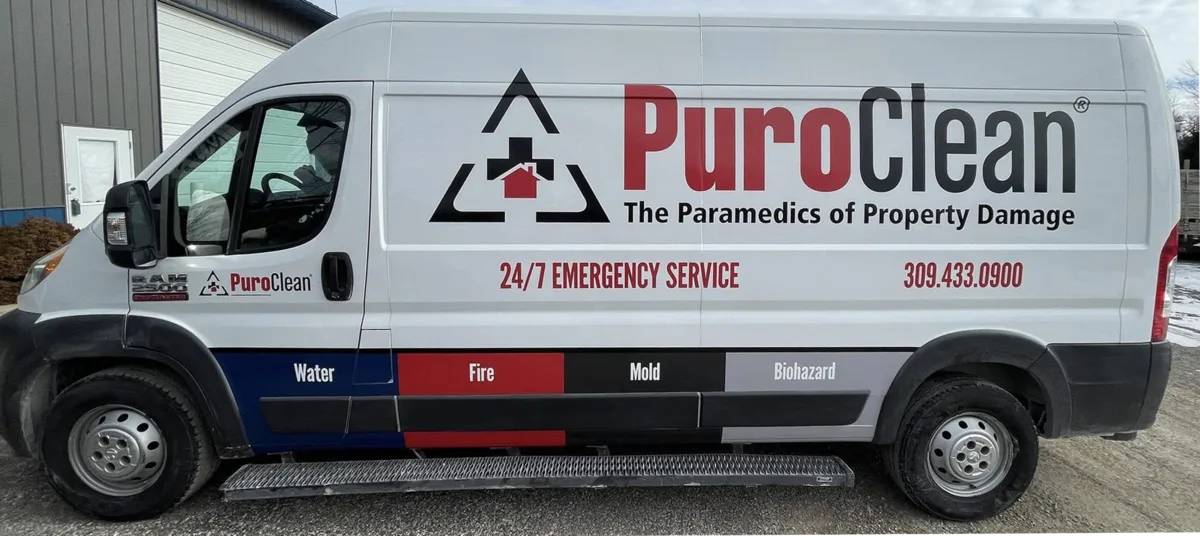
PuroClean ProMaster cargo van wrap by Chicago Fleet Wraps

Weather and Vandalism Resilience

Chicago billboards are vulnerable to weather damage. High winds can tear vinyl faces, ice storms can damage structures, and heavy snow can obscure messaging for days. When a billboard is damaged or obscured, you're still paying the monthly lease while receiving zero impressions. Billboard companies typically don't offer refunds for weather-related downtime.

Cast vinyl install detail by Chicago Fleet Wraps

Vehicle wraps are engineered to withstand Chicago's worst weather. Premium cast vinyl with UV-resistant overlaminate handles temperature extremes from -10°F to 140°F, resists road salt corrosion, and maintains color vibrancy through years of sun exposure. Even in a blizzard, your wrapped vehicle is still advertising. Parked in a lot, driving through snow, or sitting in traffic. There's no weather condition that takes your vehicle wrap offline.

Vandalism is another consideration. Billboard vandalism (graffiti, poster covering) is common in urban areas and can take days to remediate. Vehicle wraps are resistant to most vandalism. Spray paint can be removed from overlaminated vinyl with the right solvents, and minor scratches buff out. For businesses concerned about brand image consistency, wraps offer far more control than a billboard you don't physically own or monitor.

“Vehicle Wraps Vs Billboards. The part nobody tells you: we squeegee from the center out so no air ever gets trapped under the print. We have done it that way since 2001.”
Written by Karigan Fridel, Chicago Fleet Wraps. Reviewed by Roy Wraps, Founder. 25 years in the wrap industry. Avery Dennison certified installer; in-house HP Latex printing.